Following my visiting sites relating to Agatha Christie’s birth and early childhood it was time to visit the other end of her life.
Wallingford, an historic market town and civil parish
located between Oxford and Reading on the River Thames, has a number of claims
to fame – housing possibly the largest tithe barn in Europe, being ‘Causton’
the capital of fictitious Midsomer County in ‘Midsomer Murders’
and having a very famous former resident.
In 1930, Christie married Max Mallowan, a young
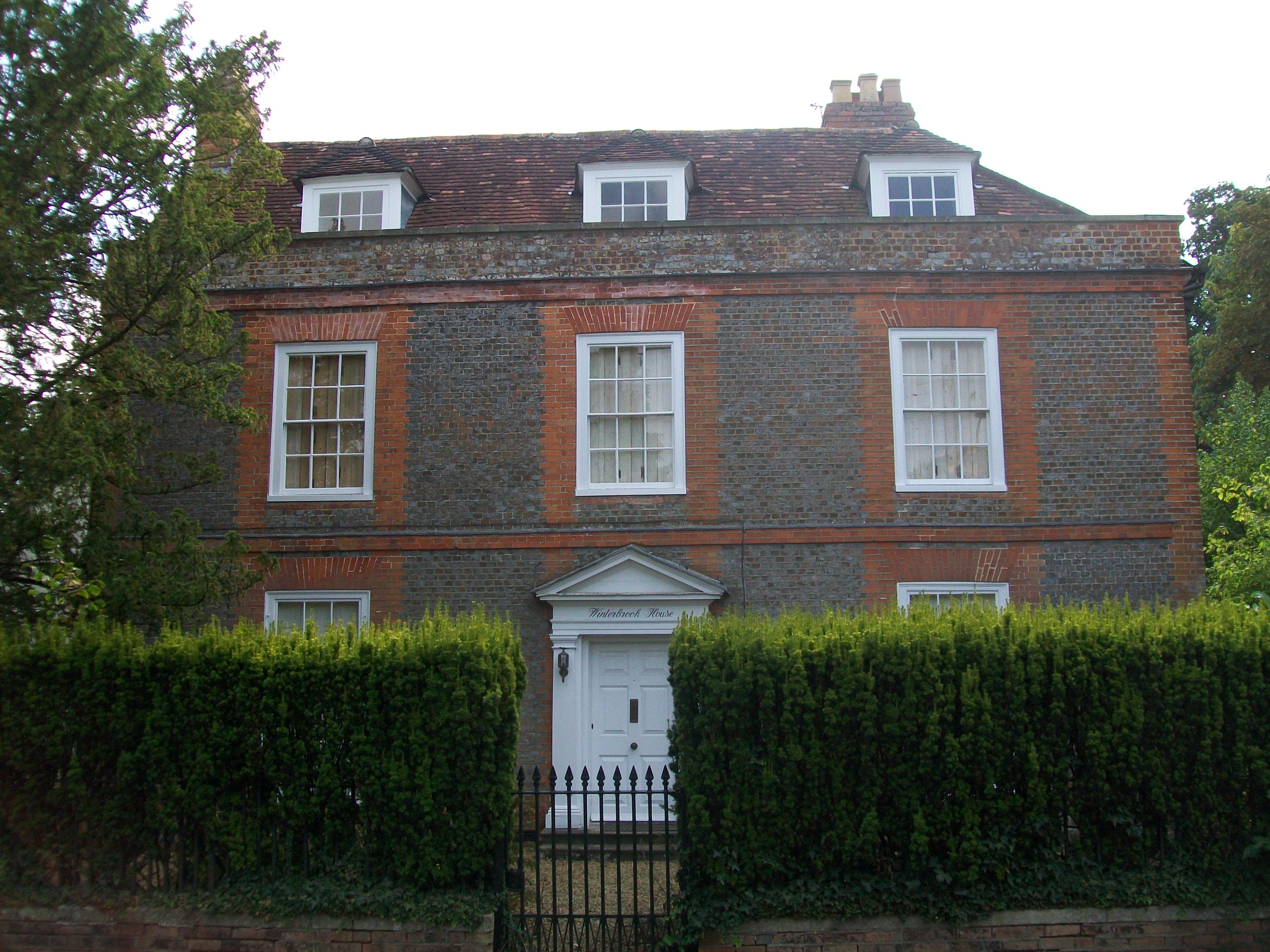
archaeologist, and in 1934 the couple bought Winterbrook House on the outskirts
of Wallingford, a home where they could relax away from the public gaze. She
was known locally as Mrs Mallowan, but ‘Agatha Christie’ became the
best-selling novelist of all time and many of her books were written here. It
was also here that she died.
“In the end I saw an
advertisement in The Times. It was about a week before we were going abroad to
Syria one autumn.
‘Look, Max,’ I said. ‘There’s a house advertised in Wallingford. You know how
much we liked Wallingford? Now, if this should be one of those houses on the
river. There was nothing to let when we were there.’ We rang up the agent, and
dashed down.
It was a delightful, small, Queen Anne house, rather close to the road, but behind
it was a garden with a walled kitchen section–bigger than we wanted–and below
that again what Max has always thought of as ideal: meadows sweeping right down
to the river. It was a pretty bit of river, about a mile out of Wallingford….We
hadn’t much time to dilly-dally. The house was remarkably cheap, for sale freehold,
and we made up our minds then and there. We rang up the agent, signed things,
spoke to lawyers and surveyors, and, subject to the usual surveyor’s approval, bought the house.
Unfortunately we were not able to see it again for about nine months. We left for
Syria, and spent the whole time there wondering whether we had been terribly
foolish. We had meant to buy a tiny cottage, instead we had bought this Queen
Anne house with gracious windows and good proportions. But Wallingford was a
nice place. It had a poor railway service, and was therefore not at all the
sort of place people came to, either from Oxford or from London. ‘I think,’
said Max, ‘we are going to be very happy there.’
And sure enough we have been very happy there, for nearly thirty-five years now,
I suppose. Max’s library has been enlarged to twice its length, and he looks right
down the length of it to the river. Winterbrook House, Wallingford, is Max’s
house, and always has been. Ashfield was my house, and I think my daughter, Rosalind’s” - Agatha
Christie – An Autobiography (1977)
I therefore made my way to Wallingford, catching a
train to Guildford, then another to Reading. On getting out at Reading, I realised
that I had picked the weekend of the Reading Festival, so one side of the station was very
busy.
I then caught an X39 bus to Wallingford Market Square,
making my way to start point of ‘The Agatha Christie Trail’, Wallingford Museum. This had not yet opened, so I decided to end with this on my circular
walk. Making my way across the Kinecroft, a green park opposite which is
surrounded by surviving ninth-century earthworks, I passed the double doors of
the Wallingford Masonic Hall. This was the former home of the Sinodun Players,
an amateur theatrical group where Agatha Christie enjoyed many productions. She
was their President from 1951-1976. More recently, members of the Players have
regularly appeared as extras in ‘Midsomer Murders’.


Walking along a narrow lane, I found myself back at
the Market Place, the central point of the town with its splendid
seventeenth-century Town Hall. This area has been used repeatedly in ‘Midsomer
Murders’, such as in ‘Death’s Shadow’ where the Vicar (Richard Briers)
cycles across the Market Place to engage two actors in conversation; ‘Strangler’s
Wood’ where Cully (Laura Howard) waits for her father to bring tickets for
a play with DS Troy (Daniel Casey) being sent instead; and ‘Breaking The
Chain’ where Wallingford becomes ‘Burwood Mantle’ the host of an
international cycling competition.
On the far side of the Market Place was the Grade II
listed Corn Exchange, built in
1856 and now home to the Sinodun Players. They acquired the building in the
week that Agatha Christie died. She and Max felt they risked failure by the
venture ! The building is entirely run
by volunteers, who created a 176 seat auditorium from a derelict shell, which
shows theatre and film most nights each week. The venue, described by John
Nettles as “a beautiful old theatre”, also features in four ‘Midsomer
Murder’ episodes, including a central role in ‘Death of a Hollow Man’,
where the second victim inadvertently cuts his own throat on stage during the
final act of a production of ‘Amadeus’, due to the safety tape on the
prop knife being removed. (It was during
this episode, the third filmed, that members of the Sinodun Players first
became involved with the production).

Walking away from the Corn Exchange, along St. Mary’s
Street, I passed Pettit’s (where Agatha shopped), and after around ten minutes
entered the suburb of Winterbrook, crossing Bradford’s Brook. At a nearby
junction was an information board, outlining Christie’s connection with the
town, and outlining the two main places of interest.
Walking alongside the long brick wall with high hedges
which encloses the large gardens of Winterbook House (now privately owned), I
finally reached a gate through which the house could be seen. This was
Christie’s home until her death in 1976, marked by a Blue Plaque next to the
front door.
Crossing the road, I walked down Winterbrook Lane,
almost directly opposite, until I reached a footpath which led me to the
Wallingford bypass. Crossing the road carefully, I walked down a long track
opposite, following this to a level-crossing over the Cholsey & Wallingford
Railway (C&WR). This rural branch line was first opened in 1866, and is
now run as a heritage railway on select days.
Having crossed the railway line, I followed a footpath
running parallel to the railway, for a little over a mile. The path finally
left the railway and cut diagonally across a field called ‘Shepheards Garden’,
past a grand house built by Cholsey’s Lord of the Manor, James Morrison in 1836
for a tenant farmer. At the far side of this field, I passed through a kissing
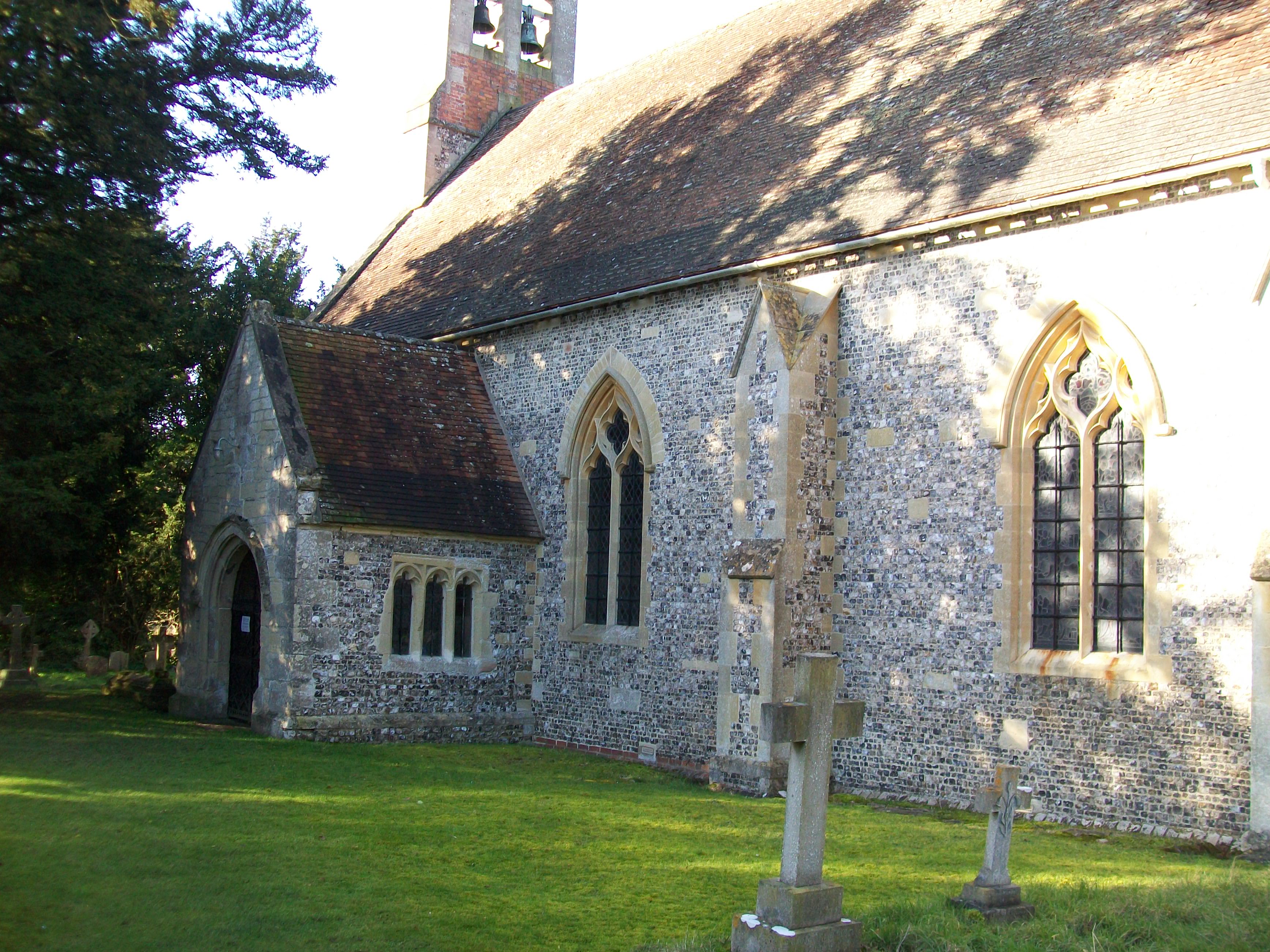
gate, crossing a road, before going down the gravel path to St. Mary’s Church,
where Agatha had worshipped.


There was another display board at the entrance to the
churchyard, but it was to the far right-hand corner of the churchyard, beside a
wall, that I made a beeline. Here was the grave of Christie and her husband Max
Mallowan with a very large gravestone making it easy to find. Christie was
buried there in 1976, following a service in the Church, with Mallowan joining
her in 1978. (Amusingly Mallowan’s occupation is wrong spelt as ‘Archealologist’)
The gravestone also features an extract from Edmund Spenser’s ‘The Faerie
Queene’. On the churchyard wall to the left of the grave was a plaque recording
the names of those sponsoring trees planted in the churchyard in memory of
Christie.
Exiting the churchyard, I turned right to follow the
road over a hump-backed railway bridge into Cholsey Village. After reaching the
Old School, I found a side road, Mary Mead, named after Miss Marple's small village from Christie's books.
Turning right at a road junction, I made my way to Cholsey
Station, where it seemed that the C&WR simply ran from one of the platforms
of the main train station.
Retracing my steps, I continued onto Wallingford Road,
before after around half-a-mile I turned down a side road, passing a number of
small farms. I finally reached the main road, crossing it and follow a footpath
to the Thames Towpath. It was then around a mile’s walk beside an unspoilt
stretch of The Thames, until I eventually passed beneath the Wallingford
Bypass. This indicated that I was now back in Winterbrook, on a path that
Christie enjoyed walking. The gardens of several houses stretched down to the
towpath, including Winterbrook House. I therefore took some photos of the house
from the back also.


Continuing along the towpath, I crossed a wooden
footbridge over Bradford’s Brook as it entered the Thames, turning left and
following the footpath beside the brook to the main road, just up from Winterbrook
House. Turning right, I made a brief detour to take a photo of Wallingford
Station, where in 2017 a restored Victorian canopy taken down from Maidenhead
Station in 2014 to make way for Crossrail electrification and improvements, was
installed. I then retraced my steps, walking back to the Market Place.
Returning to the Museum, I paid my £5 entrance fee
(which allows entrance all year) and went to look at the displays. The Museum,
housed in an oak-framed building of medieval origins, presents displays on the
town’s rich royal history, including its great medieval castle. However, it was
their exhibition on the Queen of Crime that I made a beeline for. The Agatha Christie exhibition focused on
Christie’s home life, with photographs, stories and memories gathered from
people who knew her, visited her, served her in shops and even interviewed her.
Personal, handwritten letters were displayed, reflecting details as diverse as
her love of pantomime and her frustrations with declining health in her final years.
There was also complete Poirot and Miss Marple costumes, and a signed
photograph of David Suchet as Poirot. Unfortunately, photographs were not
permitted as many of the items were on loan from private individuals. ‘Midsomer
Murders’ also had a small display, with memorabilia highlighting the town’s
link with the series.
Returning to the Market Place, there was just time to dash
to take a photo of Wallingford Bridge which also appeared in ‘Midsomer
Murders: Death’s Shadow’, with DCI Barnaby driving daughter Cully across it,
before returning in time for my bus onto my afternoon’s activities.